- Common models
- Alphard, Vellfire, Noah, Voxy
- Still
- Right-hand drive
- Age for UK test
- From the car's evidence
- Worth asking for
- Paperwork from Japan
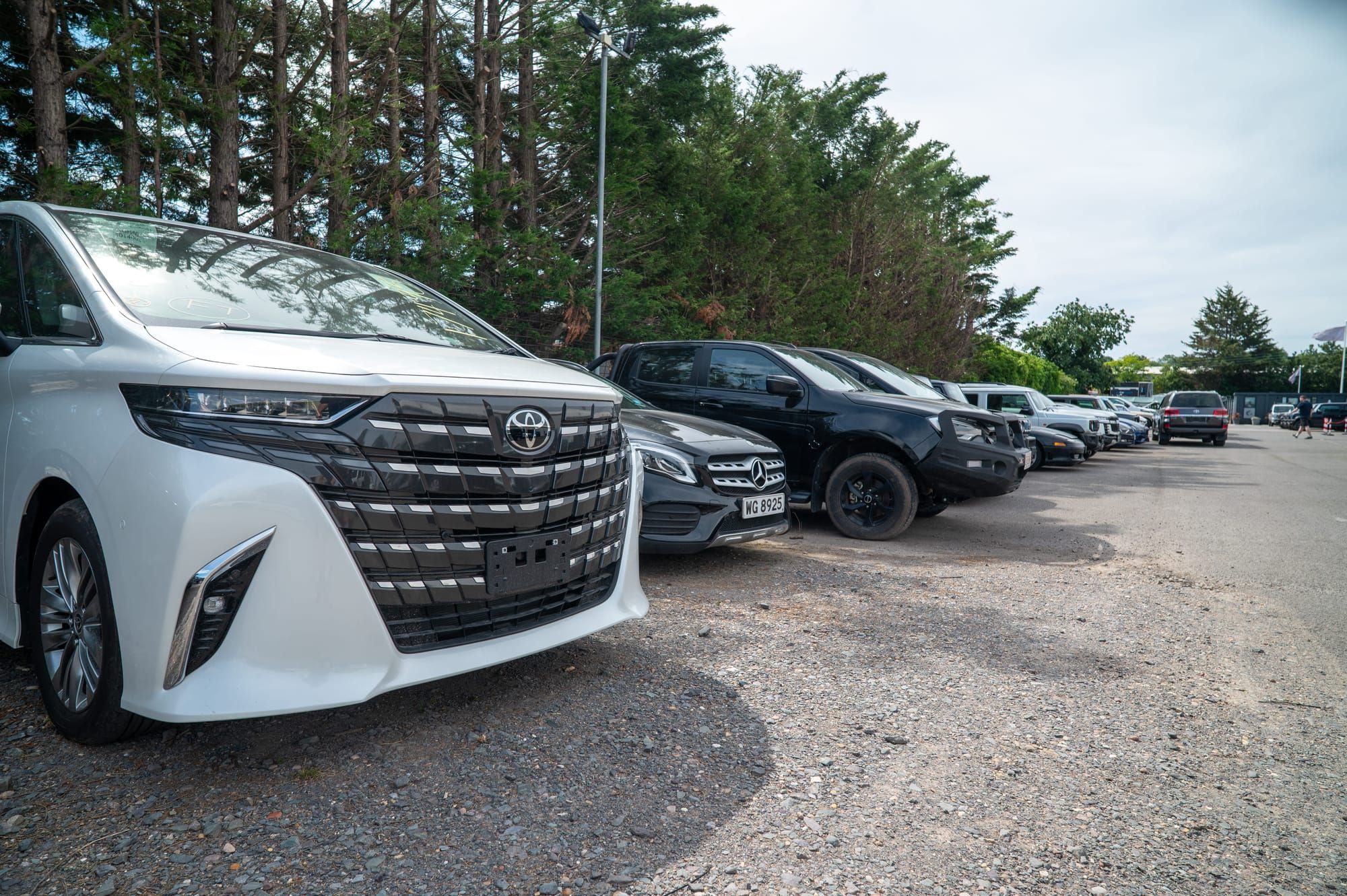
Not every car on Hong Kong’s roads came through the brand’s official dealer. A large share of them, especially Japanese MPVs and luxury cars, were brought in by independent importers, many of them straight from Japan. In Hong Kong these are known as parallel imports, or 水貨, with dealer cars called 行貨.
If your car is one of them, there’s nothing to worry about. It’s still right-hand drive, it still follows exactly the same route to the UK, and it pays exactly the same tax. What changes is a handful of details, and it helps to know about them before the car ships.
How to tell which you have
The seller or the original importer will usually know. Dealer cars tend to come with a Hong Kong service book stamped by the official dealer. Parallel imports often have Japanese-language manuals, a Japanese-market sat nav, and sometimes paperwork from Japan.
Models built for Japan are a giveaway too. The Toyota Noah and Voxy and the Honda Stepwgn were made for the Japanese market, so a Hong Kong example has almost certainly come from there. Alphards and Vellfires can be either, so it’s worth asking.
| Dealer car (行貨) | Parallel import (水貨) | |
|---|---|---|
| Sold new by | The brand’s Hong Kong dealer | An independent importer |
| Built for | Hong Kong market | Often the Japanese market |
| Service history | Usually Hong Kong dealer | Mixed, sometimes started in Japan |
| Manuals and menus | Usually English or Chinese | Often Japanese |
| Route to the UK | The same | The same |
The car’s age
This is the detail that matters most.
In the UK, the car’s age decides which test it needs. Under ten years old means an IVA test, ten and over means an MOT, and over forty means no MOT if it hasn’t been substantially changed. Age also decides the registration number the DVLA gives it, and whether an older car can qualify for the reduced tax on cars over thirty.
A used parallel import may have been built and registered in Japan some time before it was first registered in Hong Kong. The DVLA dates the car from the evidence of when it was built and first registered, so that earlier history can count. Paperwork from Japan, such as the export certificate, helps the car to be dated correctly. If the seller or importer has it, ask for it and keep it with the Hong Kong registration document.
It mostly matters at the edges. A car close to ten years old may need an MOT rather than an IVA, and a car close to thirty may qualify for historic tax treatment sooner than its Hong Kong papers suggest. We’ll look at the dates with you before the car ships.
Mileage across two countries
A used car that came from Japan has two chapters of history, and the mileage needs to make sense across both.
Japanese auction and export records, where the importer kept them, can show the mileage when the car left Japan. Compare that with the Hong Kong service records and the current reading. The numbers should only ever go up. If you’re buying, our guide to buying a used car in Hong Kong has a fuller checklist.
Spec, menus and the radio
A Japanese-market car is built for Japan, and a few things show it.
The menus and sat nav may be in Japanese, and on some head units there’s no option to switch to English. Built-in maps won’t cover the UK either. Apple CarPlay or Android Auto is often the simplest answer, and a replacement head unit is an option on others.
Japanese radios use a different FM band to the UK, so some UK stations may be out of reach. It’s a known issue with known fixes, and we can talk you through them.
The rest is the same as any Hong Kong car. The speedometer needs to read in mph and the car needs a correct rear fog light, both of which we do in our own workshop before the test. Our guide to window tint, toll tags and other Hong Kong extras covers the small jobs to clear before you leave.
Parts, servicing and insurance
For models also sold in the UK, parts and servicing are rarely an issue. For Japanese-only models like the Noah, Voxy or Stepwgn, routine parts are usually shared with other models, and there are UK specialists who know these cars well. It’s still worth thinking about where you’ll have it serviced before it arrives.
Insurers will want to know the car is an import, and some treat Japanese-market models differently from UK ones. Tell them the full make, model and year, and ask for quotes early. Our guide to driving licence and insurance after the move covers the rest.
How we handle it
From collection in Hong Kong to delivery in the UK, a parallel import goes through exactly the same process as any other car. It travels in a shared or dedicated container with marine insurance, is unloaded at our own facility, and clears customs through our in-house team. We prepare and test it on our own IVA lane, then register it through our dealer-level DVLA account. You can follow every stage in the customer portal.
If you’re bringing an Alphard, Vellfire or another big MPV, our guide to big MPVs from Hong Kong covers seating and layouts as well.
Next steps
Get a quote with the make, model and year, and tell us if the car came from Japan. If you have any Japanese paperwork, mention that too. We’ll tell you plainly what it means for the test and the timings. We’d be more than happy to help should you need it.
Questions
People also ask
What is a parallel import in Hong Kong?
A car brought into Hong Kong by an independent importer rather than the brand's official dealer. In Hong Kong they're often called 水貨, with dealer cars called 行貨. Many come from Japan, new or used.
Is a parallel-import car harder to bring to the UK?
No. It's still right-hand drive, it follows the same route, and it pays the same tax. The differences are in the detail: the car's age, its mileage history, the spec and parts.
Which test will a Japanese-market car need?
The same as any other car: IVA under ten years old, MOT at ten and over, and no MOT over forty if it hasn't been substantially changed. The age comes from the evidence of when the car was built and first registered, which may be earlier than its Hong Kong registration.
Will the screen and sat nav work in English?
Not always. Some Japanese-market head units can't be switched out of Japanese, and the built-in maps won't cover the UK. Apple CarPlay or Android Auto is often the easiest answer, and we can talk you through the options.